Direct Answer
Thoracic outlet syndrome (TOS) is a condition where nerves or blood vessels running between your collarbone and first rib get compressed, causing pain, tingling, numbness or weakness in your neck, shoulder, arm or hand. Most cases involve the nerves rather than blood vessels, and most develop from posture, repetitive overhead movement or muscle tightness rather than a single injury. Physiotherapy, focused on posture, stretching and strengthening, is the first line of treatment and works well for most people.
Summary
In short, thoracic outlet syndrome happens when the space your nerves and blood vessels pass through, between your collarbone and first rib, gets narrowed enough to cause compression. In about 95 percent of cases it is the nerves affected, which shows up as pain, tingling or numbness running down the arm rather than swelling or discolouration. While a direct blow to the neck can trigger it, most cases build up gradually from poor posture, repetitive overhead work or sport, or tight muscles around the neck and shoulder. Physiotherapy, not surgery, is the first line of treatment for the vast majority of people, and it works by calming symptoms down first, then rebuilding posture, strength and movement so the thoracic outlet has room to breathe again.
Last updated: 18 July 2026
What Is Thoracic Outlet Syndrome
The thoracic outlet is the narrow space between your collarbone and your first rib, right where the nerves of your brachial plexus and the blood vessels feeding your arm pass through on their way from your neck to your hand. When that space gets crowded, whether from muscle tightness, posture, or an anatomical quirk like an extra rib, those structures can get compressed.
Around 95 percent of cases affect the nerves, which is why most people notice pain, tingling, numbness or weakness running down the arm rather than swelling. Less commonly, the veins or arteries are affected instead, which can cause colour changes, swelling or a heavy feeling in the arm. Either way, symptoms tend to worsen with your arms overhead or held out in front of you for long periods, which is a useful clue for your physio when working out what is actually going on.
What Actually Causes It
TOS gets pinned on a single dramatic injury more often than it should be. In clinic, the more common picture is posture and load built up over months, not one accident. Desk work with your shoulders rounded forward, repetitive overhead movement in sports like swimming, throwing or weightlifting, and tight muscles around the neck and chest all narrow the thoracic outlet gradually.
Safe Work Australia's own data on work related musculoskeletal disorders backs this up. Poor posture and sustained awkward positions at a desk are consistently flagged as a major contributor to neck and shoulder problems, and TOS sits squarely in that pattern for a lot of the office workers and tradies we see.
A direct blow to the neck, from a car accident, a bad tackle or a fall, can absolutely bring on TOS as well, and should never be ignored. It is just not the usual story for most people who walk through our door with these symptoms.
How TOS Is Diagnosed
Your GP or physio will start with your history and a physical examination, including specific tests that reproduce your symptoms by moving your arm into positions that narrow the thoracic outlet further. From there, nerve conduction studies, imaging or vascular tests may be used to confirm which structures are involved and rule out other causes of arm and shoulder pain, since a number of conditions can mimic TOS early on.
Physiotherapy Treatment for TOS
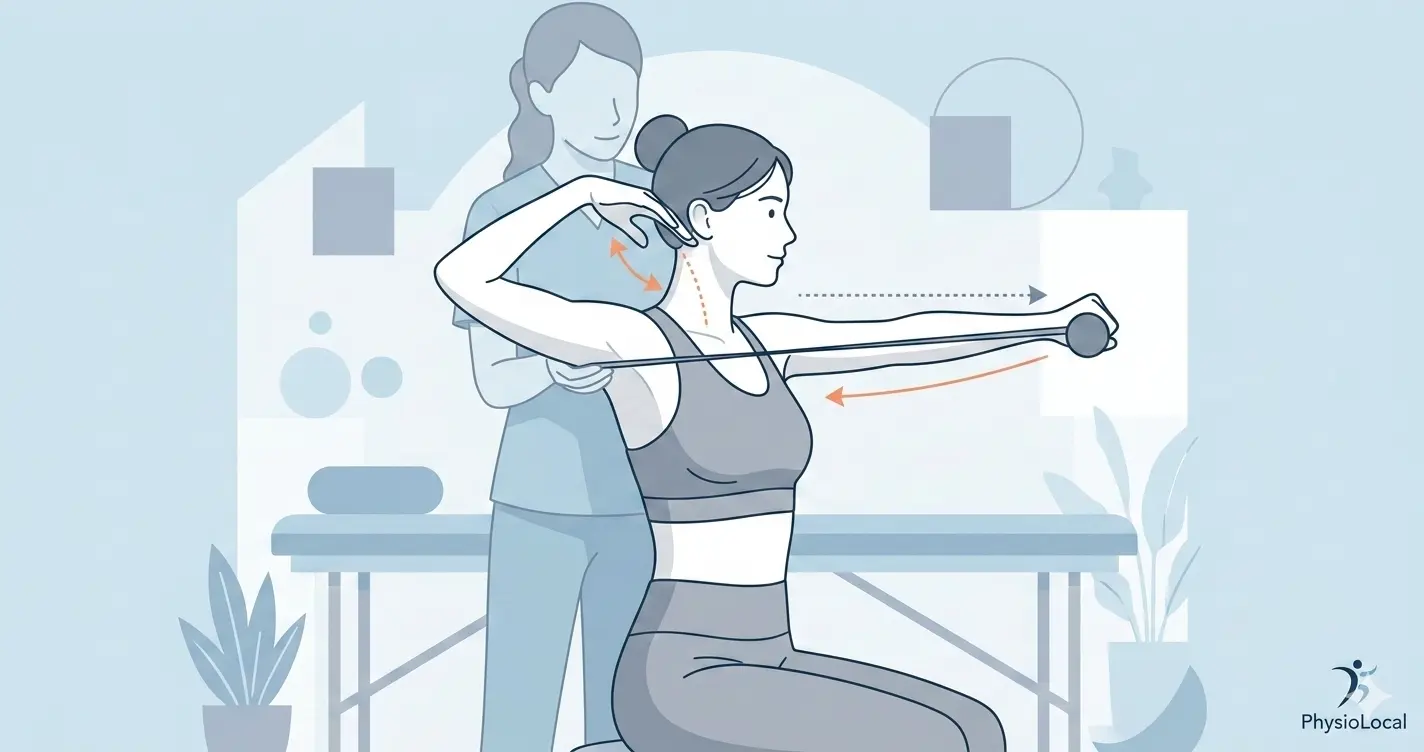
For the vast majority of people, physiotherapy is the first and often the only treatment needed. A good rehabilitation program for TOS usually combines postural correction, stretching of the muscles that close the thoracic outlet, strengthening of the muscles that open it back up, and manual therapy such as remedial massage to ease tightness around the neck, chest and shoulder.
This lines up with what the research actually shows. A current clinical review of thoracic outlet syndrome rehabilitation points to postural retraining, scapular control and graded strengthening as the backbone of conservative management, alongside education about the postures and movements that aggravate symptoms.
Our approach at Physio Local is straightforward. We calm the irritated nerve or vessel down first, using manual therapy and load modification, then build your posture, strength and capacity back up so your thoracic outlet has room again and can handle what your work or sport asks of it.
Posture and Daily Habits That Help
Small daily changes matter more than people expect. Avoid sleeping with an arm stretched up above your head, take regular breaks from repetitive overhead tasks at work, and be mindful of carrying heavy bags on one shoulder for long periods. If your job has you sitting for hours, standing up and resetting your posture every 30 to 45 minutes goes a long way.
Carrying extra weight around the neck and shoulders can also narrow the thoracic outlet further, so if that applies to you, gradual, sustainable weight loss alongside your physiotherapy can speed up recovery. This is something worth raising with your physio directly rather than trying to manage it alone.
Exercises That Help Open the Thoracic Outlet
Exercise is not one size fits all with TOS, and what helps one person can aggravate another, so this is general education rather than a program to follow without guidance. Common elements include gentle chin tucks and neck stretches to ease tightness at the base of the skull, shoulder blade squeezes to improve scapular control, and chest stretches to open the front of the shoulder. Shoulder shrugs and rolls done through the day are a simple way to keep the muscles around the thoracic outlet moving rather than locked in one position.
The exercises that actually help you depend on which structures are involved and what is driving your specific presentation, which is exactly why a proper assessment matters before you start.
When Surgery Is Needed
Surgery is only needed in a small minority of cases, generally when vascular involvement is significant or when a structural cause like an extra cervical rib is clearly identified and conservative treatment has not resolved symptoms. A systematic review of thoracic outlet syndrome in sport found that even in athletes, who put unusually high demands through this area, surgery remains a later option after sports physiotherapy has been given a genuine chance to work.
Frequently Asked Questions
Can thoracic outlet syndrome go away on its own?
Mild cases can improve with activity modification alone, but most people recover faster and more completely with a structured physiotherapy program addressing posture, strength and movement patterns.
How long does physiotherapy take to work for TOS?
Many people notice meaningful relief within 4 to 6 weeks of starting physiotherapy, with continued improvement over the following months as strength and posture changes take hold.
Is thoracic outlet syndrome linked to desk work?
Yes, for a lot of people. Prolonged sitting with rounded shoulders and poor workstation setup is a well documented contributor to neck and shoulder musculoskeletal problems, including TOS.
Can I keep exercising or playing sport with TOS?
Often yes, with modifications. This is something to work through with your physio rather than stopping everything, since the goal is building your body's capacity to handle the movements you need, not avoiding them indefinitely.
Sources
- Safe Work Australia, Work Related Musculoskeletal Disorders in Australia
- Current Clinical Concepts: Rehabilitation of Thoracic Outlet Syndrome, PMC
- Thoracic Outlet Syndrome in Sport: A Systematic Review, PMC



%201.avif)