Rotator Cuff Injuries - Causes, Symptoms and Treatment
Shoulder pain is one of the most common complaints our team sees. Rotator cuff injuries are a frequent culprit - here's what you need to know.

Shoulder pain is one of the most common reasons people come to see us - and rotator cuff injuries are one of the most frequent causes. They affect people of all ages, from gym-goers and overhead athletes to people who've never played sport in their lives.
Here's what you need to know about rotator cuff injuries and how physiotherapy can help.
What Is the Rotator Cuff?
The rotator cuff is a group of four muscles and their tendons that surround the shoulder joint. Their job is to stabilise the ball of the shoulder within the socket while allowing a wide range of arm movement - lifting, reaching, throwing, and rotating.
Because the shoulder is one of the most mobile joints in the body, the rotator cuff works extremely hard. This makes it vulnerable to both acute injury and gradual wear over time.
Common Types of Rotator Cuff Injury
- Rotator cuff tendinopathy - irritation or degeneration of the tendon, often from overuse or repetitive loading
- Rotator cuff tear - a partial or full thickness tear, which can occur suddenly (from a fall or heavy lift) or develop gradually
- Shoulder impingement - where the rotator cuff tendons become pinched during arm movement, causing pain and inflammation
- Bursitis - inflammation of the bursa (a fluid-filled sac that cushions the joint), often occurring alongside tendon irritation
Signs and Symptoms
Rotator cuff problems typically present as:
- Pain at the front or side of the shoulder, sometimes extending into the upper arm
- Pain when lifting the arm overhead or reaching behind the back
- Weakness with pushing, pulling, or lifting movements
- Night pain, particularly when lying on the affected shoulder
- A clicking or catching sensation with shoulder movement
How Is It Treated?
The good news is that most rotator cuff injuries respond well to conservative physiotherapy management - surgery is far less commonly needed than many people assume.
Treatment at Physio Local in Glenmore Park typically includes:
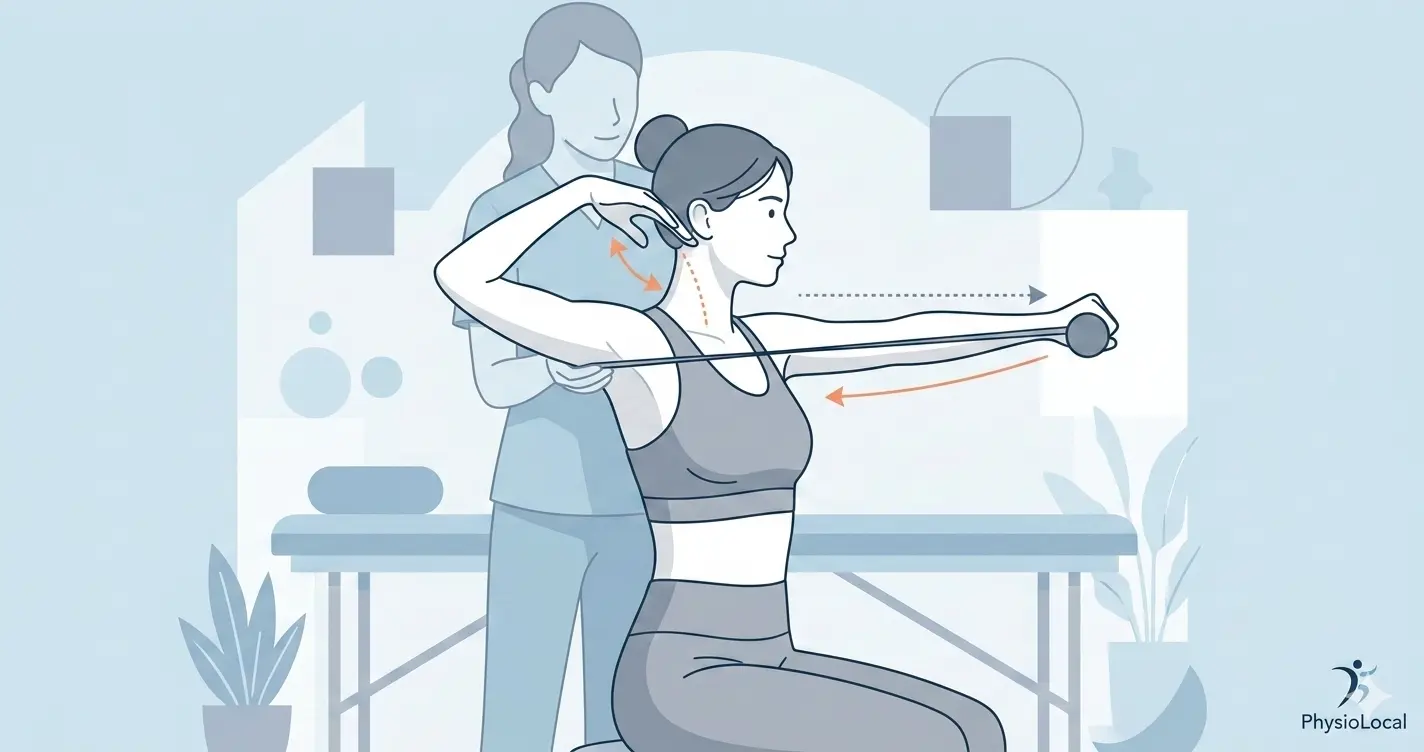
- Manual therapy to restore shoulder mobility and reduce pain
- A graduated strengthening program targeting the rotator cuff and surrounding muscles
- Postural and movement retraining to reduce the load on the injured tissue
- Activity modification guidance to allow the tissue to heal without stopping all movement
- Dry needling or soft tissue release where appropriate
How Long Does Recovery Take?
Recovery time varies significantly depending on the type and severity of the injury. Tendinopathy and impingement often respond well within 6-12 weeks of consistent treatment. Larger tears may take longer, and some may eventually require surgical review - though this is the exception rather than the rule.
The key is starting treatment early and sticking with the program. Shoulder injuries that are left unmanaged tend to become more complex over time.
If shoulder pain is affecting your daily life or training, book in with the Physio Local team. We'll assess your shoulder properly and put a clear plan in place to get you back to full function.
Explore More Posts You Might Like
%201.avif)






Start Your
Recovery Today
If pain or an injury is holding you back, we’re ready to help you take the next step.
Glenmore Park
114 The Lakes Drive, Glenmore Park NSW 2745
~5 min from Glenbrook
via Great Western Highway
Mon–Fri · 8:00 am – 5:30 pm


Blaxland
134C Great Western Highway, Blaxland NSW 2774
~5 min from Glenbrook
via Great Western Highway
Mon–Fri · 8:00 am – 7:00 pm